The main problem now is that both sides feel they are winning in the long run, which removes the incentive to compromise today.
This “50-50” split creates a dangerous equilibrium:
The Jewish “Momentum” Perspective: Many Israelis look at the map and see a historical trajectory of success. From the defenselessness of the 1834–1939 massacres to becoming a nuclear-armed regional superpower with a booming economy, the “Greater Israel” camp believes that if they simply hold on, the world will eventually accept the new reality as a fait accompli.
The Arab “Endurance” Perspective: Many Palestinians and their supporters look at demographics and global shifting sentiment. They see the growing isolation of Israel in international courts (like the ICJ) and a younger generation in the West that is more critical of Israel. They believe that like the Crusaders or the British Mandate, the current status quo is a historical “blip” that will eventually collapse under its own weight.
The “Total Victory” Trap
The tragedy of choosing “Total Victory” is that it guarantees a century of attrition.
For Israel, “Total Victory” (displacement) likely means becoming a pariah state, losing the Western alliances that provide its “Qualitative Military Edge.”
For Palestinians, “Total Victory” (fighting to the bitter end) likely means generations more of displacement, poverty, and the loss of any viable land to build a state upon.
A Framework for Resolution
A viable solution requires an integrated approach that addresses the legal, moral, and political dimensions of the conflict:
Universal Human Rights: A mutual, unconditional declaration by both parties accepting the Universal Declaration of Human Rights as the foundation for all future interactions.
Restorative Justice: This involves acknowledging and providing reparations for historical wrongs on both sides. A “Truth and Reconciliation” process would require an honest accounting of the suffering of both Jews and Palestinians.
Distributive Justice: The equitable sharing of resources—land, water, and economic opportunity—is essential. Rapid economic development, sometimes called “Economic Peace,” could provide the material stability needed for hearts and minds to “cool down”.
The Political Models
Three primary models have long dominated the diplomatic landscape, with a fourth occasionally proposed:
Two-State Solution: Independent states of Israel and Palestine based on the 1967 borders. This remains the most widely endorsed international framework.
One-State Solution: A single democratic state with equal rights for all citizens. This is often criticized as unrealistic due to the irreconcilable national identities of both peoples.
Confederation: Two sovereign states with open borders and shared management of key issues like security and natural resources.
A New Homeland: Proposals to establish a Palestinian state outside current borders (e.g., in Jordan or the Sinai) are historically and politically controversial and are largely rejected by the international community and regional powers.
Conclusion: The Path of Collective Responsibility
The resolution of this long-standing friction likely rests upon the emergence of an increasingly aware and engaged citizenry. Historically, political leadership has often been hesitant to initiate bold shifts toward peace without a clear and overwhelming mandate from the public. When the status quo is maintained, it is frequently because the perceived political risks of compromise outweigh the immediate pressures for change.
True progress requires a shift in the internal discourse of both societies. Placing equal responsibility on both sides means acknowledging that the current impasse is a product of collective choices, narratives, and historical grievances nurtured over generations. By extension, the responsibility for finding a peaceful resolution is also shared. A lasting peace cannot be imposed solely from above; it must be supported by a foundational demand from the people for stability, dignity, and mutual recognition.
By prioritizing humanitarian outcomes and universal rights over zero-sum political gains, an informed public can create an environment where peaceful coexistence becomes the most viable path forward. This transition from a state of friction to a state of resolution depends on the willingness of individuals to envision a future defined not by the conflicts of the past, but by the shared necessity of a secure and prosperous tomorrow for all.
I believe Iran’s political outlook since 1979 has less to do with Islam and more to do with Iran being a proud nation with a proud history, as the Persian empire, going back thousands of years—one that was conquered many times and successfully rose from the ashes every time. This proud nation was sick and tired of being manipulated by imperial forces in the 20th century.
Many historians argue that the 1979 Revolution was as much about national sovereignty as it was about religion. It’s a concept often called “Iranian Exceptionalism.”
For centuries, Iran (Persia) has maintained a distinct cultural and linguistic identity despite being conquered by Greeks, Arabs, Mongols, and Turks. Instead of being absorbed, Persian culture often “Persianized” its conquerors.
In the 20th century, this pride crashed head-on into Western intervention:
The 1953 Coup: The CIA and MI6-led overthrow of the democratically elected Mohammad Mosaddegh (who wanted to nationalize Iranian oil) is frequently cited as the “original sin” that turned Iranian nationalism against the West.
Anti-Imperialism: The slogan “Neither East nor West” used by the revolutionary government wasn’t just religious; it was a defiant statement that Iran would no longer be a playground for Cold War superpowers (the U.S. or the USSR).
The Shi’a Identity: Even the choice of Shi’ism centuries ago is often viewed by scholars as a way for Persians to distinguish themselves from the surrounding Sunni Arab caliphates, blending faith with a specific national “brand.”
While the language of the state since 1979 has been Islamic, the motivation is often rooted in a deep-seated desire to be a regional hegemon that answers to no one—reclaiming the status held by the Achaemenid or Sassanid Empires.
That is a core pillar of the “Persian Complex”—a term some scholars use to describe the tension between Iran’s immense historical self-worth and its modern geopolitical reality. Many Iranians feel that while the West traces its roots to Greece and Rome, it conveniently ignores that the Persian Empire was often the more advanced, tolerant, and organized superpower of that same era.
This resentment is fueled by several specific areas where Persian contributions are frequently “misplaced” or overlooked in Western education:
The First Bill of Rights: The Cyrus Cylinder (539 BCE) is widely considered the world’s first charter of human rights. It established religious tolerance and freed enslaved people long before similar Western concepts took hold.
The Foundations of Science: Figures like Al-Khwarizmi (the father of Algebra) and Ibn Sina (Avicenna, whose medical texts were used in Europe for 600 years) are often generalized as “Islamic” scholars, which many feel erases their specific Persian identity and the pre-Islamic intellectual traditions that made their work possible.
Administrative Innovation: The Persians invented the first Postal System (Chapar Khaneh), the first centralized bureaucracy, and advanced irrigation systems (Qanats) that are still used today.
Cultural “Smear Campaigns”: There is a long-standing grievance that Western history is told through the lens of ancient Greek historians (like Herodotus), who depicted Persians as “barbarians” and “oriental despots” to make the Greek victory seem like a triumph of freedom over tyranny.
In the 20th century, this pride made Western interference—like the 1953 Coup or the heavy-handedness of the Anglo-Persian Oil Company—feel like a personal insult to a “rightful” world power. The 1979 Revolution allowed the leadership to channel that resentment into a policy of “Total Independence”.
Long before the Greeks arrived, the ancestors of modern Iranians—the Elamites, Medes, and Persians—spent nearly 3,000 years in a cycle of brutal conflict and eventual triumph against the major Mesopotamian superpowers.
The Elamite-Sumerian Wars (c. 2700 – 2000 BCE)
The Elamites, centered in Susa (modern-day Khuzestan), are the earliest known civilization on the Iranian plateau. They were the primary rivals to the Sumerians and Akkadians.
For over a millennium, Elam and Sumerian city-states like Ur and Kish traded and fought. The Sumerian King List records the first war in human history as a Sumerian victory over Elam in 2700 BCE.
The Elamites eventually had their revenge. In 2004 BCE, they sacked the great city of Ur, captured its last king, and effectively ended the Third Dynasty of Ur, one of the most powerful states of the ancient world.
The Babylonian Rivalry (c. 1800 – 1100 BCE)
As Babylon rose under Hammurabi, Elam became a “counterbalance” to Babylonian power.
Hammurabi initially sought Elamite help to conquer Mesopotamia but later turned on them and annexed their territory.
Under the Shutrukid Dynasty (c. 1100s BCE), Elam reached its peak. They invaded Babylon, killed its king, and famously carried away the Stele of Hammurabi (the law code) as a war trophy to Susa. For a brief window, the Elamites were the undisputed masters of the region.
Resistance Against the Assyrian “War Machine” (c. 900 – 612 BCE)
The Neo-Assyrian Empire was arguably the most terrifying military force of the ancient world. They viewed the Iranian plateau as a source of horses and tribute.
Assyrian kings like Sargon II and Ashurbanipal launched repeated, devastating campaigns into Media and Elam. In 646 BCE, Ashurbanipal sacked Susa so thoroughly that he claimed to have sown the ground with salt so nothing could grow.
This “rose from the ashes” moment is defining. The Medes, who had been fractured tribal lords, unified specifically to survive Assyrian aggression. In 612 BCE, the Medes allied with the Babylonians to siege and destroy Nineveh, the Assyrian capital, permanently erasing the Assyrian Empire from history.
The Rise of the Achaemenids (550 BCE)
By the time Cyrus the Great appeared, the Persians were a vassal state to the Medes. In a swift “rising from the ashes” of their own, Cyrus overthrew the Median King (his own grandfather), annexed the Lydian and Babylonian empires, and created the Achaemenid Empire—the largest the world had ever seen.
By the time the Greeks (Alexander) invaded in 334 BCE, the Persians had already spent thousands of years defeating every major empire that had tried to subjugate them.
That historical “digestion” of conquerors is often called Persianization, and it’s why some historians joke that no one actually “conquered” Persia—they just applied for citizenship.
When a nomadic or foreign force took the throne, they found that to effectively run such a complex, vast territory, they had to adopt Persian systems, language, and court etiquette.
The Greeks: “The Persianized Macedonians”
Alexander the Great began his campaign to “civilize” the Persians but ended it by dressing in Persian robes and marrying a Persian princess (Roxana).
His successors, the Seleucids, initially promoted Greek culture, but over time, the Greek elite “melted” into the local Persian population.
As a result, the Persian language outlived the Greek administration, and the subsequent Parthian and Sassanid empires explicitly framed themselves as restorers of the original Persian glory, treating the Greek era as a temporary blip.
The Arabs: “The Abbasid Transformation”
While the Arab conquest in the 7th century brought Islam, the Abbasid Caliphate (which overthrew the Arab-centric Umayyads) was essentially a Persian empire with an Arabic title.
TThe Abbasids moved their capital to Baghdad (near the old Sassanid capital) and adopted Sassanid court rituals. Persian families like the Barmakids became the real power behind the throne as Grand Viziers.
Ultimately, Persian became the first language to break the Arabic monopoly on literature and science, eventually becoming the lingua franca of the entire eastern Islamic world.
The Mongols: “The Ilkhans Turn Persian”
The Mongol invasion was the most catastrophic, destroying 90% of the population in some areas. Yet, even they succumbed to the culture.
The Mongol rulers (the Ilkhans) realized they couldn’t govern from a horse. They hired Persian bureaucrats to manage the state and eventually converted to Islam to integrate with their subjects.
In the end, instead of turning Persia into a Mongol steppe, the Mongols became patrons of Persian arts and history. By the end of their rule, the Ilkhans were effectively Persian monarchs.
The Romans: “The Peer Rivalry”
Rome is the only empire that never fully conquered Persia. Instead, they engaged in a 700-year “rivalry of equals”.
While they didn’t conquer each other, they “absorbed” each other’s styles. Roman emperors adopted Persian diadems and court ceremonies, while Persians adapted Roman engineering and artistic techniques.
This ability to “Persianize” the enemy is exactly why modern Iranians feel such a deep sense of cultural superiority. They see themselves as the “Civilizers of Conquerors.”
In many ways, this history of “winning by being more cultured” makes it easy to think that Iran’s current “Soft Power” exportation of their ideology) is just a modern version of this ancient survival tactic.
In fact, alignment with the “oppressed” is a core tenet of the Iranian state’s identity, often codified through the concept of the Mostazafin (the “disinherited” or “oppressed”).
Since the 1979 Revolution, Iran has framed its foreign policy not just as a religious mission, but as a global struggle against Mostakberin (the “arrogant” or “oppressors”), which they equate with Western imperial powers. This worldview creates a powerful bridge between modern geopolitical strategy and Iran’s historical identity as a nation that has survived and resisted external empires for millennia.
The support for groups like Hamas, Hezbollah, and the Houthis (the Axis of Resistance) is often presented by Tehran through two lenses:
Ideological Solidarity: The Iranian Constitution specifically mandates support for the “just struggles of the mostazafin against the mostakberin in every corner of the globe.” This allows the state to frame its alliances as a moral duty to those fighting colonization or foreign intervention.
Forward Defense: Strategically, this also serves as a “forward defense” mechanism. By supporting these groups, Iran keeps its rivals occupied and maintains a buffer, ensuring that any potential conflict remains far from its own borders—a lesson learned from centuries of being a battlefield for other empires.
Many Iranians see this as a way of reclaiming their “rightful” status as a regional leader that protects its own and stands up to the “imperialists” who manipulated them in the 20th century.
The connection between Iran’s 20th-century experience and their view of Israel is central to their state narrative. From Tehran’s perspective, Israel is often framed as a “Western outpost” or a colonial relic—a modern version of the foreign interventions they fought against for decades.
As of April 2026, this historical friction has escalated into a direct and devastating conflict:
Unceasing Pressure: Following significant Israeli and U.S. strikes in early 2026, which killed Supreme Leader Ali Khamenei, the “Axis of Resistance” has faced immense strain. Groups like Hezbollah have seen their leadership decimated, and the fall of the Assad regime in Syria has further severed Iran’s “land bridge” for supplies.
The “Imperial” Mirror: Iranian leadership continues to frame these actions as “cowardly” imperialist aggression. They explicitly link the current war to a centuries-old struggle for civilizational survival against foreign “hegemony”.
Peace Initiatives: There are active, if fragile, diplomatic efforts. As of April 6, 2026, reports indicate that Iran has rejected a U.S.-proposed temporary ceasefire, instead demanding a “permanent end to the war” and guarantees against future attacks.
Potential for Calming: While some hardliners, like the newly named Mojtaba Khamenei, have issued defiant warnings, there are signs of a counter-proposal that includes conditions for ending hostilities. By offering a path toward mutual sovereignty and an end to what Iran perceives as imperial management—America could provide the “face-saving” exit needed for de-escalation.
However, the current sentiment in Tehran remains one of “defiance over submission.” Many in the leadership believe that surrendering under military pressure would be a betrayal of their national pride—the idea that a “Great Power” cannot be forced into a “petty” peace.
Perhaps what is needed is a citizens-led council that might have more legitimacy in the eyes of the Iranian public than the official state-to-state negotiations they currently distrust.
However, for a citizens-led council to work, it wouldn’t just be negotiating a peace treaty with Israel; it would be negotiating the dismantling of a military-industrial mafia that has spent decades intertwining itself with the nation’s survival.
As of April 6, 2026, the situation inside Iran has reached a critical boiling point where this “oppressive rule” is being tested like never before:
The IRGC’s “Existential Grip”
The Revolutionary Guard (IRGC) is no longer just a military wing; it is the de facto government as of late March 2026.
The IRGC controls the Oil Headquarters, which manages billions in annual sales used to fund both the state and its regional proxies. Relinquishing power means losing not just political control, but their entire source of wealth.
Recent U.S. and Israeli strikes have killed dozens of top IRGC commanders, including Majid Khademi, the head of IRGC Intelligence. This “decapitation campaign” has left the remaining leadership more paranoid and likely to cling to power through even harsher internal repression.
The Succession Crisis
The recent death of Ali Khamenei and the elevation of his son, Mojtaba Khamenei, has created a legitimacy vacuum. Many analysts believe Mojtaba lacks his father’s independent power base and is essentially a front for the IRGC.
There is also a deepening rift between President Pezeshkian, who has warned that the economy could collapse within weeks without a ceasefire, and IRGC commanders who reject any de-escalation that threatens their “resistance” brand.
The “Citizens’ Mandate” vs. The State
While the rulers are dug in, the Iranian people are increasingly emboldened by the regime’s visible military weakness.
Recent surveys show that 70–80% of Iranians would not vote for the Islamic Republic if given a free choice. Despite internet blackouts and “terrifying” crackdowns reported by Amnesty International, nightly rooftop chants and public celebrations of the regime’s military defeats suggest the psychological barrier of fear has broken.
The challenge for any “World Peace Citizens Council” would be how to empower these 89% of Iranians who support a democratic system without the transition turning into a bloody civil war. The IRGC has shown they would rather see the “entire country taken out,” as President Trump warned today, than lose their grip on the oil wealth.
Of course, a citizens’ council would need international military protection to even begin operating inside Iran unless the sheer weight of a unified Iranian public would prove to be enough to eventually force the IRGC to step aside.
I believe that a massive public relations campaign is called for to both inform people in the west about the proud history of Persia, what led to the revolution in 1979 and the subsequent axis of resistance and, at the same time, to enlighten them on the true culturally-proud nature of Iranians and the truth about the dilemma they now face with this brutal mafia-like organization desperately maintaining control at any price.
If the Iranians see that the outside world not only supports their struggle to release themselves from the dreadful situation they are now in and understands and recognizes them as a people with a history worthy of pride, not just a developing nation hankering for “western democracy”, it will embolden them to take on the IRGC with new determination and fervour.
The truth is the Iranian people often feel caught between two fires. On one side, they face a brutal domestic regime; on the other, they face a West that frequently conflates their 2,500-year-old civilization with the last 45 years of theocracy.
As of April 6, 2026, this recognition of Iranian “civilizational identity” is more than just a history lesson—it is a vital tool for their survival during the current war.
Breaking the “Developing Nation” Myth
Western media often frames Iran as a “rogue state” or a “developing nation” in need of Western-style rescue. A campaign that highlights Persia’s contributions—from the Cyrus Cylinder (the first human rights charter) to its role as the “Civilizer of Conquerors”—would fundamentally shift the narrative.
By recognizing Iran as a “Great Power” currently held hostage, the West acknowledges that the Iranian people have the civilizational DNA to govern themselves. They aren’t “hankering” for a Western import; they are reclaiming an Iranian tradition of justice and governance that predates many Western nations.
Validating the “Dilemma” of the IRGC
The Iranian public is currently facing an unprecedented “mafia-like” crackdown.
Reports from Amnesty International detail how the IRGC and its Basij units used lethal force in January against over 5 million protesters who took to the streets earlier this year.
When the outside world signals that it understands the difference between the Iranian nation and the IRGC mafia, it strips the regime of its favorite propaganda tool: the claim that all opposition is a “foreign-led plot” to destroy Iran’s culture.
The Power of “Cultural Recognition”
Current polling from early 2026 suggests that while 89% of Iranians support a democratic system, they are fiercely nationalistic. They have reacted with fury to threats against their cultural sites, viewing such attacks as a “war on their identity.”
The regime is currently trying to hijack this pride through recruitment campaigns like “Janfada” (Sacrificing Life), urging Iranians to die for the “state” in the name of national defense.
If the West instead launched a campaign celebrating Persian heritage, it would directly undermine this recruitment. It would tell the Iranian people: “We value your history as much as you do; our conflict is only with the group holding that history hostage.”
The “Face-Saving” Transition
As the IRGC consolidates control following the death of Ali Khamenei, a cultural recognition campaign would provide the psychological foundation for a “World Peace Citizens Council.” It shifts the negotiation from “Western Demands” to “Persian Sovereignty.”
To build a campaign that truly resonates, it must highlight how these Persian innovations weren’t just regional milestones, but the very “connective tissue” of modern global life.
Here, for example, are a few of the specific, high-impact contributions that a Western audience would find most “eye-opening,” categorized by their direct influence on today’s world.
The Foundations of Human Rights & Governance
The Cyrus Cylinder (539 BCE): Long before the Magna Carta, Cyrus the Great established the first universal charter of human rights. It declared religious tolerance and racial equality, and its principles are so foundational they are reflected in the first four articles of the UN Universal Declaration of Human Rights.
The Postal System (Chapar Khaneh): Developed under Darius I, this was the world’s first reliable network of relay stations. The unofficial motto of the U.S. Postal Service is actually a direct quote from the Greek historian Herodotus describing these Persian couriers.
Mathematics and the Digital Age
The Father of Algebra: Al-Khwarizmi (c. 780–850 CE) formalized algebra as a mathematical discipline. His name was Latinized as “Algoritmi,” which is the direct root of the word “Algorithm”—the literal engine of every piece of software and social media used today.
Precise Timekeeping: Omar Khayyam (1048–1131) designed the Jalali Calendar, which is still in use. It is mathematically more accurate than the Gregorian calendar used by the West; it has an error of one day every 5,000 years, compared to the Gregorian’s one day every 3,330 years.
Science and Modern Medicine
The “Prince of Physicians”: Ibn Sina (Avicenna, 980–1037) wrote The Canon of Medicine, a five-volume encyclopedia that remained the standard medical textbook in European universities until the 18th century.
The First Teaching Hospital: The Academy of Gundeshapur (founded c. 240 CE) was the first institution in the world where young doctors-in-training worked under the supervision of experienced physicians—the direct ancestor of the modern medical residency.
Engineering and Daily Lifestyle
Sustainable Tech: Persians invented the Windmill (c. 500 CE) for grinding grain and pumping water. They also perfected the Windcatcher (Badgir), an ancient form of zero-electricity air conditioning still cooling buildings in desert regions today.
Ancient Refrigeration: The Yakhchal was a domed ceramic structure that allowed Persians to store ice and keep food cold in the middle of the desert as early as 400 BCE.
Cultural “Heirlooms”: Simple things the West takes for granted—trousers, backgammon, polo, dessert after a meal, and even the guitar (from the Persian Tar)—all have their roots in Persian daily life.
By leading with these “Universal Truths,” an intense PR campaign as I have suggested would show that helping Iranians reclaim their country isn’t about “exporting democracy”—it’s about allowing a civilizational pioneer to return to its natural role as a global contributor.
A campaign titled “What do you really know about Iran?” would be a powerful way to bridge the gap between ancient Persian excellence and the modern struggle for sovereignty. By framing it as a series of “revelations,” a PR campaign can challenge the viewer’s biases while building respect for the Iranian people’s current dilemma.
As of April 6, 2026, this type of campaign is more urgent than ever. While the world watches the intensifying war and ultimatums over the Strait of Hormuz, the Iranian people are caught in a brutal internal crackdown by a regime desperate to maintain control at any cost.
The “Emboldening” Effect
By validating their history, an effective PR campaign takes away the regime’s most effective weapon: the claim that the West hates “Iran” and its “culture.” If the West says, “We love Persia; we just oppose the mafia holding it hostage,” it gives the 89% of Iranians who want to change the moral clearance to fight for their identity without feeling like “Western puppets.”
As the IRGC is known for its own sophisticated digital influence campaigns, it is reasonable to expect them to try to label a citizens’ council as a “Western intelligence front.”
But, by maintaining a strict “Citizen-to-Citizen” focus and by keeping the conversation on culture and universal rights, it would be very difficult for them to attack such a council without looking like they are attacking their own heritage.
Time is running out and the dangers inherent in further aggressive military intervention are real. A viable solution to the problem will only be found by immediate de-escalation and a reframing of the entire goal of the west to reach a mutually acceptable resolution.
Human history, when viewed from a sufficient altitude — say, just above the level where oxygen becomes optional — reveals a curious and persistent idea:
That the Creator of the Universe, having successfully engineered galaxies, gravity, and the alarming versatility of fungi, is also deeply concerned with real estate.
Not in a general sense, mind you. Not “all the Earth is yours, do take care of it.” No, no. Something far more specific.
A parcel.
A particular stretch of sun-baked terrain, hotly contested, thoroughly inhabited, and — according to certain ancient documents — already spoken for.
The Original Deal
The agreement itself is rather extraordinary.
It appears that at some point in humanity’s early contractual phase, an arrangement was struck between a small group of desert wanderers and the Supreme Architect of All Things — who, for reasons never entirely clarified, chose to act in this instance as a kind of cosmic real estate agent.
The terms were straightforward: The humans would remain loyal, behave themselves (broadly speaking), and uphold a moral code that included justice, compassion, and being a shining example to others and in return, they would receive exclusive, eternal rights to a specific piece of land.
There was, however, a ceremonial clause. A rather… intimate one.
One assumes the legal department was going through a creative phase.
Still, covenant secured, signatures metaphorically inked, and the land — at least on paper — was theirs.
A Minor Oversight
There was just one small complication.
The land was already full of people.
Now, this is where the story takes on that uniquely human quality: the ability to interpret a sacred agreement with just enough flexibility to make it extraordinarily convenient.
Faced with the logistical inconvenience of existing inhabitants, the new claimants did what humans have done since the dawn of time: They consulted the fine print.
And, depending on who was doing the reading, the document appeared to say something along the lines of “Kindly vacate the premises… or we shall assist you in doing so.”
Which, while perhaps not the most neighborly interpretation, had the advantage of being decisive.
God, the Subcontractor
At this point, one might reasonably ask “Why would an omnipotent being — capable of conjuring storms, plagues, and the occasional pillar of fire — choose to outsource land clearance to a handful of enthusiastic believers with swords?”
Surely a well-placed swarm of locusts could have expedited matters.
But no. The work was delegated. And as often happens when humans are given divine authorization and minimal supervision, things became… energetic.
The Forgotten Clauses
Now, buried deep within the original agreement — in what scholars might refer to as the “less exciting sections” — were additional stipulations. Nothing dramatic. Just minor expectations like act with justice, show compassion, serve as a moral example, and be, in essence, a light unto others.
Unfortunately, these clauses suffered from a common contractual fate.
They were overshadowed by the more immediately actionable provisions.
It is, after all, difficult to focus on moral philosophy when one is busy securing property.
Periodic Audits
From time to time, however, it seemed that the original Grantor of the land conducted… audits.
And when these reviews found the agreement being interpreted with excessive enthusiasm and insufficient ethics, corrective measures were introduced.
Foreign powers arrived.
Empires rose and fell.
Populations were relocated — sometimes abruptly.
One gets the impression that the message being conveyed was:
“The contract is still valid… but you might want to read all of it.”
The Long Intermission
Centuries passed. Millennia, even.
The land changed hands, as land tends to do when humans are involved.
New narratives formed.
New claims emerged. New groups arrived, each with their own understanding of history, legitimacy, and divine intent.
Meanwhile, the original agreement remained — ancient, debated, and endlessly reinterpreted.
The Grand Return
Eventually, descendants of the original signatories — along with others who identified with the same story — returned to reclaim the property.
They brought with them history, memory, faith and, perhaps most importantly, certainty.
Unfortunately, they were not alone in possessing these things.
Others, who had lived on the land for generations, had developed their own equally compelling narratives.
And so, in a development that will surprise absolutely no one familiar with human behavior, multiple groups arrived at the same conclusion:“This land is ours. Exclusively. Obviously.”
The Present Situation
And here we find ourselves.
A modern world, armed with satellites, smartphones, and astonishing techno- logical sophistication…still attempting to resolve a dispute rooted in an ancient agreement whose terms remain, at best, open to interpretation.
Each side citing history. Each side invoking justice. Each side, in its own way, appealing — implicitly or explicitly — to the same cosmic authority.
A Modest Observation
It may be, just possibly, that the difficulty lies not in the land itself…
…but in the enduring human tendency to believe that the infinite has issued exclusive property rights, the eternal has taken sides, and that the Creator of the Universe is personally invested in boundary lines.
Final Thought
If there is a lesson hidden somewhere in the original agreement — tucked between the ceremonial clauses and the more actionable passages — it might be this: That the parts about compassion, justice, and being a light unto others were not decorative.
OR A NOT-SO-SILENT NIGHT: MY SWAN SONG AS SANTA CLAUS AT THE TOP TEN DISCO IN SINGAPORE.
A Not-So-Silent Night: My Swan Song as Santa Claus
Exactly thirty-five years ago, at the stroke of midnight on Christmas Eve, I made my final appearance as Santa Claus at Singapore’s legendary Top Ten nightclub. It was the end of an illustrious—and increasingly ridiculous—four-year run.
Allow me to take you on one last sleigh ride through the escalating madness that led to that night.
Year One: Politically Correct Santa (Sort Of)
In 1987, Peter Bader, the Top Ten’s owner, made me an offer I didn’t know I’d end up regretting with my spinal column.
“Be our Santa,” he said.
My first outing as the jolly fat man was fairly traditional: Ho-ho-ho’s, hearty belly laughs, the usual “Merr-rrrry Christmas, Singapore!” The crowd got what they expected—at first.
Then my special guest appeared: a young Singaporean Indian man in a crisp People’s Action Party whites and a mask of Prime Minister Lee Kuan Yew. He strolled onto the stage, solemn as a cabinet meeting, and perched on my lap.
From my sack of seasonal surprises, I pulled out his gift: a Singapore edition of Monopoly. It was my gentle nod to the PAP’s long-standing dominance—satire-lite: enough to make people chuckle, not enough to get me quietly deported.
Year Two: Santa Goes Tropo
By 1988, it was clear the character needed, shall we say, development.
I decided it was time to loosen Santa’s belt—figuratively and literally.
That year, Santa was ambushed onstage by a squad of scantily clad “reindeer” dancers. With theatrical outrage, they stripped him down layer by layer until the audience was confronted with a more climate-appropriate version of Saint Nick: a saggy old man’s bathing suit, Santa-style.
If the North Pole was freezing, the Top Ten that night was positively equatorial. You could almost hear Rudolph demanding hazard pay.
Year Three: Santa’s Naughty Secret
By 1989, subtlety was officially dead.
I went for broke.
Once again, the reindeer descended on Santa and began their familiar disrobing routine. This time, the audience discovered that underneath the traditional suit, Santa had been harboring a scandalous secret.
Out came the garter belt. Then the fishnet stockings. Then a massive bra, generously stuffed to Kris Kringle capacity. In his hand, the pièce de résistance: a whip.
As Madonna’s sultry “Santa Baby” purred through the speakers, I transformed from Father Christmas into something more like Mrs. Claus’s unhinged alter ego. For added realism, a friend had sewn me a skin-colored under-suit that could be padded with pillows, allowing this decidedly non-fat performer to become a pleasantly plump cross-dressing Santa in full off-season bloom.
One might say that by then, the Top Ten’s Santa tradition was already teetering on the brink of the absurd. But the brink, it turned out, was still a long way from the edge I was heading toward.
Year Four: Satanic Santa
As Christmas 1990 approached, several things conspired to push me over that edge.
First, I had decided to leave Singapore in early January 1991. A documentary on the Peruvian city of Iquitos had lodged itself in my imagination. Described as the “Venice of the Amazon,” Iquitos had once rivaled Manaus during the rubber boom. It boasted its own opera house, tropical decadence included. Then the rubber industry collapsed, undercut by Malayan rubber, and Iquitos faded into semi-mythic obscurity—just the sort of place to tempt a restless soul.
It was also where Werner Herzog had filmed Fitzcarraldo, about a man dragging a steamship over a mountain in pursuit of his opera dreams. How could I resist?
So the plan was set: I would leave Singapore, fly west via South Africa to visit old friends, then continue to Brazil and travel up the Amazon to Iquitos.
Knowing this would be my farewell appearance at the Top Ten, I wanted to make it unforgettable. The kindly old man in red, I decided, deserved a devilish final act.
My concept: Santa was actually the devil in disguise.
There was, however, one rather substantial problem.
Two weeks before Christmas, in a misguided attempt to karate chop through a teak door, I badly fractured my hand. Three pins were inserted to hold the bones together, and the whole contraption was encased in a sturdy fiberglass cast.
This orthopedic inconvenience posed a serious challenge to the spectacle I had in mind. But I was determined that nothing—even my own skeletal integrity—would stand between me and the ultimate Christmas Eve production. After all, the show must go on, especially when it really, really shouldn’t.
The Grand Design
In my head, the show played out like a twisted Christmas special directed by Terry Gilliam.
At midnight, a thin, shadowy figure would shuffle onstage. With his back to the audience, he would inflate into Santa’s familiar girth using a small tank of compressed air hidden in his sack and a concealed inner tube around his waist.
Meanwhile, the band would launch into a warped version of “Santa Claus Is Coming to Town” that would morph into a heavy rap beat, underpinning a refrain of “You better not… you better not…”—the hook for the satirical Santa rap I’d been writing.
Satanic Santa
As Santa rapped about commercial excess and spiritual bankruptcy, he would commit increasingly un-Santa-like acts: pulling a shotgun from his sack, firing at helium-filled reindeer-shaped balloons, and blasting them out of the air as they drifted above the crowd.
At no point in this creative fever dream did I seriously consider what kind of impact this might have on people who had simply come out hoping for a bit of Christmas cheer and maybe a slow dance under the disco ball.
The climax would reveal the truth.
The band’s lead singer—an attractive young Filipina—would become so disturbed by Santa’s aberrant behavior that she’d hurl herself at him, tearing off his hat and wig to reveal a pair of devil’s horns. The band members would close in, and Santa, now revealed as Satan, would fight them off with a pitchfork drawn from his sack while backing toward the rear of the stage.
At that point, I would secretly hook myself to a flying rig installed that afternoon: essentially a clothesline-thick wire stretched from the stage to the rafters, threaded through pulleys to the wings where two or three strong men were supposed to haul me skyward.
Attached to the wire was a shackle that would clip onto a hook protruding through the back of my Santa suit. The hook belonged to a windsurfing harness I wore backwards under the costume.
In a proper theatre, this sort of thing is handled by a fly system with counterweights and brakes.
We, alas, had none of that.
The idea was simple: the devil-in-disguise would flee his attackers by flying out over the dance floor, hovering above the startled masses before being dragged back down and theatrically “destroyed.” It was ambitious, dangerous, and entirely dependent on one detail.
Which is precisely where things went gloriously wrong.
The Muscle Problem
Top Ten owner Peter Bader, who had promised to recruit the muscle for this stunt, either forgot or was the victim of Singapore’s first sudden gym shortage.
Moments before showtime, instead of two burly weightlifters, he presented me with three of the scrawniest Chinese boys you could hope to find outside a noodle factory. Their combined weight roughly equaled my left leg, minus the shoe.
There was no time to find replacements. Faced with the prospect of cancelling the climactic flight, I improvised.
“Don’t try to lift me,” I told them. “Just take up the slack when I hook on, then hold on.”
That last phrase would prove unnecessarily optimistic.
Showtime
DJ Moe Alkoff stepped up to the microphone and announced to the packed dance floor that Santa himself was about to make a surprise visit. The band crashed in, and the show began.
The inflation gag worked perfectly: a thin silhouette blossomed into Santa’s rotund outline in seconds.
The rap kicked in, delivering its tongue-in-cheek sermon on the commercialization of Christmas—“all you shopkeepers get down on your kneeses, it’s time to acknowledge the baby Jesus…”—while I blasted inflatable reindeer from the air, planting suspicion that this might not be your average North Pole visitor.
Then came the confrontation. The Filipina lead singer attacked, tearing off Santa’s hat and wig to reveal the red horns. The band surged toward me as I waved my pitchfork, backing up onto the elevated drummer’s platform and groping for the wire.
Up to this point, the show had followed its dramatic arc with unnerving precision. Which meant, by the principles of the universe and Murphy’s Law, there was only one direction left to go.
The Flight From Hell
Trying not to picture three skinny boys being yanked through the pulleys like dumplings on a string, I clipped the shackle onto the hook of my harness. The fiberglass cast on my right arm had been trimmed down to a Michael Jackson-style glove earlier that day, sacrificing medical protection for finger dexterity.
Without pausing for second thoughts—I knew hesitation would be fatal—I hurled myself off the platform.
I expected to plummet headfirst onto the dance floor. Instead, to my astonishment, the boys held.
I swooped down just inches above the stage lights and sailed out over the heads of the crowd like a demented Christmas airship. The audience stared up, stunned, as Satanic Santa arced through the smoky air.
It was as I reached the far end of the swing that a new realization dawned: what goes out must come back.
I spun to face the stage and saw the drummer directly in my path. At the time, SCUD missiles were dominating news coverage of the Gulf War, and I understood exactly how they felt. I was a Santa-shaped projectile on a collision course.
Picking up speed, I slammed into the Perspex shield in front of the drum kit with bone-rattling force. The strobe lights erupted into blinding fury, freezing the chaos into disjointed frames.
Miraculously, the drummer never missed a beat. To this day, his composure stands as a shining example of Filipino band professionalism in the face of demonic aerial assault.
The impact, however, shifted my harness. I found myself dangling upside down, slowly spinning, unable to reach the stage with my outstretched arms.
Strobes, Stabbing, and Slow Motion
The drummer seized the moment and launched into a pounding, “Wipeout”-style solo, while the strobes transformed the scene into a jittering, black-and-white nightmare.
Because we’d never rehearsed this part, the three boys in the wings had no idea they were supposed to lower me. Their instincts, understandably, told them to hang on for dear life.
So there I hung, an inverted Satanic Santa, as the band members swarmed. They began stabbing frantically at my inflated midsection with the small knives I’d provided to puncture the inner tube and deflate me.
Their enthusiasm may have been just a touch over the top. One suspects that the ferocity that felled Magellan in 1521 still lurks not far beneath the surface of today’s outwardly easy-going Filipinos.
From the audience’s perspective, things must have slipped beyond comprehension: they had just watched a pitchfork-wielding Santa swoop over their heads, crash into the drum kit, then dangle upside-down while a mob hacked at him in a frenzy of flashing lights and thunderous drums.
I doubt many of them connected it to any coherent critique of consumer culture. Most were probably vowing quietly never again to spend Christmas Eve outside the safety of a living room.
Vanishing Act
Eventually, in a final Herculean heave, I managed to haul myself down enough to unhook from the harness and crawl offstage on hands and knees. At that exact moment, the strobes cut out and the lighting returned to normal.
To the audience, whose pupils hadn’t yet adjusted, it must have seemed as though Satanic Santa had simply evaporated.
Then, from the darkness, a disembodied voice à la Vincent Price floated through the club—my improvised Twilight Zone-style warning about false Santas and the dangers of greed.
The exact wording is lost to memory, but the gist was clear:
when people get greedy, Satan evens the score.
A moment later, the band slid gracefully into John Lennon’s “Happy Xmas (War Is Over),” as if nothing particularly unusual had just happened.
Exit, Pursued by Fate
Two weeks later, I was landing in Mauritius for a brief stopover before continuing to a newly post-apartheid South Africa, eager to compare the new era with the grim years I had known under the verkrampte National Party rule of old Jan Vorster.
I had no idea that my arrival there would launch a three-year odyssey that would test my survival skills as severely as any theatrical stunt, before I eventually found my way back to Singapore and the Top Ten.
The Satanic Santa Show taught me something that life has continued to prove: you can try to live as though you’re following a carefully written script, but circumstances will always conspire to send everything sideways. The real challenge is learning how to get yourself back onstage after you’ve been left dangling upside-down in the dark.
Stay tuned. There are more tales to come from a life lived with minimal regard for social conformity or conventional thinking:
Dangerous encounters inspired by the dubious wisdom of Friedrich Nietzsche.
A thousand and one miracles in the pursuit of improbable dreams.
Snakes, scorpions and centipedes: a field guide to ill-advised adventures.
Embracing the Phoenix—renewal, resurrection, and hope.
And much more, from funny to philosophical, suspenseful to sentimental, insightful to inexplicable.
In the meantime, if you ever find yourself in a crowded nightclub on Christmas Eve and the Santa onstage suddenly pulls out a shotgun and an air hose, my advice is simple.
Back in 1976, a popular daytime hangout for students at the University of Guelph was the coffee shop in the basement of Massey Hall, the art and drama department at the university. For most students, it was a place to relax and unwind between classes. To chat about what you planned to do the next night or what you had done the night before. But there were some students who thought the place was an extension of the library, a quiet spot to study and read. For the most part, these were the students who were the target of our little plot dreamed up by me and my friend Michael Henry in a moment of ennui.
In the coffee shop’s jukebox was Freddy Fender’s hit song “Wasted Days and Wasted Nights.” Not the most popular song amongst the student body back then. But on the flip side was a less well-known Spanish number that we had discovered was even less appreciated than his hit song. Titled “El Rancho Grande” or The Big Ranch, it was known in English as “I love my Rancho Grande.”
Having inadvertently stumbled upon the knowledge of just how unpopular this song was, particularly amongst those quiet, serious students who were intent on hijacking the casual, relaxed atmosphere of the coffee shop, we used to enjoy throwing it into the jukebox mix just to watch their reactions.
This little game came to a head one day when I decided to shoot for a record number of consecutive plays. There was some kind of restriction built into the system. You couldn’t put two quarters in and choose 4 plays of one song. So my first attempt only resulted in two Rancho Grandes, followed by a Wasted Days and Wasted Nights, then one more Rancho Grande.
When I saw one of the more diligent students become so agitated he put down his book, stood up and start rummaging around in his pocket for some loose change, I jumped up and declared to Michael in a loud voice, “What’s going on with that juke box?”, then rushed over to the machine. This satisfied the nerd who immediately sat down satisfied that someone else was dealing with the problem and he could hold on to his precious quarter.
But his sense of relief was short-lived as he found himself listening to three more performances of El Rancho Grande. After which he obviously had a class to go to. This little game continued for a couple more occasions until one day I discovered that Freddie Fender’s beloved big ranch had been completely extirpated from its sacred spot at R8 on the juke box.
Upon enquiry with the middle-aged ladies that served the coffee, they had arranged to have it removed by the juke box distributor due to a complaint from some of the students. Some of the students, Marge? Well, one of the students. Was it that chubby guy who always sits near the exit? Her sly smile told me all I needed to know.
I knew this was serious. It was the first time I ever heard of the juke box man coming to the campus with a new 45 (rpm record) in the middle of a school year, let alone halfway through a semester. This pompous overzealous aggie (the University of Guelph has a large agricultural college) had declared war and he was soon going to learn a valuable lesson. You don’t mess with the Arts students cuz our main reason for being at university is to have a good time.
Within a matter of minutes following this indirect declaration of war, I was orchestrating our response. Heading upstairs to one of my art studios, I gathered up some large pieces of art board, stapled them to wooden slats, grabbed some coloured markers and headed outside where Michael and I along with some friends who were just exiting the coffee shop, scribbled some slogans on the placards – R8. R8. It’s Fender we appreciate. and We Love Our Rancho Grande amongst them.
I then borrowed a camera from the College’s weekly newspaper, The Ontarion, and had someone take photos of our little protest group in front of the coffee shop entrance. Then I returned the camera together with a quick report on what had just been photographed. The editor, Chris Joule, promised to publish it in the next paper and a few days later, this is what appeared.
Armed with the newspaper, I headed to the Coffee Shop for a chat with the ladies – all of whom were my friends. Did you see this, Marge? Oh goodness me, Hugh, I had no idea it was so popular. Why do you think it gets played so often? Well, I’ll see what I can do.
It didn’t take long to get an answer. The juke box man would be back on Monday to put Freddie back in the machine. So, plans were made to celebrate its return. A sign was created to go beside the cash register offering free coffee to anyone who said I love my rancho grande. And we bought bouquets of flowers for the ladies.
Around 11 am the following Monday, we arrived with our sign and the flowers, and we waited. There was no way we were going to start the party until our enemy combatant arrived and was firmly ensconced with his pile of agricultural science books in his favourite seat by the exit. And as expected, it didn’t take long for him to appear, grab a coffee and sandwich and smugly settle into his imaginary fortress.
Quickly, the sign was set up at the till and people started collecting their free coffees, flowers were handed out and a delighted Marge came over to the juke box for a photo op.
It was only then that a coin went in, R8 was pushed, and we sat back in our seats to quietly observe our foe’s reaction.’
As the music started up with those familiar Mexican mariachi sounds, we could see him raise his head and look around as if he had heard the voice of a ghost. It sounds like it, but it couldn’t be. I just had it removed a little over a week ago. The look of confusion, gave way to fear, gave way to horror-filled confirmation, then full on rage.
Slamming his book down on his table, he marched furiously up to the till and demanded an explanation.
I’m sorry sir but we had too many complaints from students who like that song (not true), so we had no choice. We had to put it back in the juke box.
There was nothing he could say or do, and he knew without a doubt that he had just lost the war. We watched him pack up his books and head to the library where he belonged. After that, and for the remainder of the semester, I don’t think he ever came into the coffee shop and stayed longer than it took to collect his cup of joe and leave. And I don’t think we ever played R8 again after that day. There was no need to.
Three years later, before leaving campus for the last time, I noticed the juke box was full of the latest hits, but occupying the slot labelled R8 with the confidence of a tenured professor was I Love My Rancho Grande by Freddy Fender.
And now it’s time to wander back to March 1976, to the Massey Hall Coffee Shop juke box with Michael, Marge and me and enjoy, not Freddie’s version, but the original El Rancho Grande. Enjoy.
Hugh Harrison on the Oodnadatta Track, South Australia,1982
The following story is just one of countless situations in my life that really tested my faith. Not necessarily religious faith but faith in the conviction that my life has purpose. Faith that the path I have chosen to follow through life was the right one. Faith in myself. Faith in others. And yes, faith that there is a benevolent divine power to whom my life matters.
In 1982, the day after seeing Mad Max 2: Road Warrior in Vancouver, I put my BMW on a boat bound for Australia and a month later flew down and drove it around the country. Having been working as a writer, producer and director of business films for corporate and institutional clients in Canada, I was very keen on the Australian film industry at that time.
While motorbiking around the country, I read Maxwell Grant’s Inherit the Sun—the story of three generations of a pioneering family who, around the beginning of the last Century, settled in the Northern Territory— and thought it would make a great film or tv series. So, I headed to Adelaide, where the story begins, and up the Oodnadatta Track to become familiar with the landscape in which the novel plays out.
In the tiny oasis of William Creek, I ran into a bunch of young guys from Melbourne who had secured a contract from the South Australian Railway to tear up the old Ghan narrow gauge railway track between the towns of Marree and Oodnadatta and return the steel to the SAR. (The train got its nickname, The Ghan, from the fact that Afghans were originally brought to Australia with their camels to transport people and goods across the Outback.)
When they heard that I worked on a ballast gang repairing the tracks for the Canadian Pacific Railway as a student summer job in 1967, they invited me to join them for the remaining three weeks before the 1982 Christmas break.
So, there I was the very next day, swinging a spiking hammer knocking off rail fasteners in 45-degree Celsius (113°F) heat. Then climbing up as the excavator mounted on tracks that ran along the sides of the flat cars hauled 120-foot sections of track onto the decks of the flat cars. This usually resulted in the rails being twisted and wavy at which point, four of us would insert our heavy lining bars into holes in the rails and twist them straight before sliding them over flush with the previously loaded tracks.
We did this non-stop all day, piling the rails in stacks that were 4 or 5 rails high, not even stopping or lunch. As the rails piled higher, oil from the excavator made the surface more and slippery, a real potential hazard I later discovered the hard way when the lining bar I was pulling on to straighten a rail popped out. I went sliding backwards and did a perfect backwards swan dive off the top of the stack landing on my head and neck about 15 feet down as the train was on an embankment leading to one of the many bridges that span the dry river gulches along the route. Pumped full of adrenaline, I leaped back onto the rail car and straightened out the track single-handedly – a task that normally requires four men.
Our camp, so to speak, consisted of a couple of sleeper cars sitting beside the track with no running water, which meant we went to bed covered in grease from head to toe getting progressively blacker as the week proceeded until Sunday arrived and we could travel to the little pub/hotel at William Creek for our weekly shower.
By about the third day on the job, I was assigned to drive the huge twin diesel locomotives that hauled the long line of flat cars as we loaded them before taking the tracks down to Marree, unloading them and returning to the desert for more. I was given about two minutes of instruction before assuming control. “That’s forward. That’s back. Don’t give it too much welly or you’ll get sparks flying.”
At the end of those three weeks, I found myself in Marree looking for a way to get back to my motorbike which was stored at the little galvanized tin-covered William Creek Hotel.
No one was travelling up the Oodnadatta track at that time of the year, especially that year of the big drought with temperatures soaring around 45°C every day. Fortunately, I found a little section car abandoned beside the old railway station in Marree, carried out a few repairs to the broken frame and drove it the entire 200 kms of rail that remained, taking me to a point about 5 kms short of William Creek.
After walking in that withering heat for about 10 minutes, I was understandably pleased to see the hotel’s old Peugeot Station wagon coming in my direction. It was the hotel‘s hired hand who knew I was coming and just reckoned I should have reached the end of the line by about that time.
So, after going back to the section car and transferring all my gear into the car, we headed back to the hotel where I could shower up, rest and prepare for the journey ahead.
Two days later, Dec.24th, somewhere between the town of Oodnadatta and the Stuart Highway, as I pushed my bike as fast as I could hoping to get to Alice Springs for Christmas, I lost control on a rough section of the track, went over the handlebars, and smashed my unprotected head against the jagged rocks.
When I came to, and before I could even figure out who I was, where I was and which way I was going, I saw the bike on fire and, without a second thought, used what little drinking water I had to put out the flames.
It was only after the fire was extinguished and my mental faculties were restored, that I began to realize the seriousness of my situation. Here I was in the driest part of the driest state in the driest country during the worst drought in a century and I had just thrown away my water when, of course, sand would have been just as effective.
As that thought crossed my mind, I was relieved to feel drops of rain and looked up to thank the angelic cloud that had come to my rescue. To my surprise, the sky above me was bright blue, not a wisp of whiteness to be seen in any direction. Then, glancing back at the ground, I saw the rain I felt was bright red.
Quick inspection of my head in one of the shattered motorbike rearview mirrors revealed a gaping bone-exposing gash down the left side of my head from above the temple to behind the ear.
Locating one of two far-flung panier cases, I found my first aid kit and poured a small bottle of hydrogen peroxide into the hole in my head. As the contents frothed up and foamed, I wrapped a long roll of gauze around my head, then covered it with my stretchy knitted toque to hold everything in place.
I then turned my attention to finding a source of water somewhere in that vast desert landscape. Old Nat Geo documentaries suggested to me then it was possible to dig a hole under a bush and suck water up with a hollow reed. But not there, not that year. Everything was dry, bone dry. It was clear to me that by the next day, I would be dead from thirst and cooked like a Christmas turkey.
I knew that no one would find me, and I started to become angry. After all, it was thirteen years to the day since I had collapsed in Pakistan in a field, dying from typhoid, hepatitis, amoebic dysentery, and pneumonia. And having survived that occasion, 13 years later I still hadn’t discovered my true purpose in life.
As I cursed at God and swore that I wouldn’t even bother to write a goodbye note, something strange happened.
From out of nowhere, a gust of wind blew sand across my path as if I was being rebuked by the big man himself.
O ye of little faith!
As day turned into night, and I lay in the sand beside the track, the discomfort of thirst became overwhelming. I wanted to pull my tongue out and tear my skin off.
Drifting in and out of sleep, I had vivid dreams of canoeing in Canada on white water rapids and standing at the base of waterfalls soaking up the spray. I would see myself opening a fridge full of cold drinks.
A few times I awoke from a dream believing I had just figured out the solution to my dilemma. I could drink the water in my radiator or get the bike running by connecting the battery to the engine with a short piece of wire from a broken hanger, only to remember that the engine was air-cooled or realize that there was no way a short piece of wire could possibly replace that melted blob of a wiring harness.
At some time in the early morning, when that killer sun had returned to the sky, just before I opened my eyes to face my executioner, I heard a strange snorting sound. There was something, some kind of animal, out there in the desert with me.
Peeking cautiously through the slits of my eyes, I saw them. Brumbies-Australia’s wild horses. I was surrounded by a small herd of brumbies. In an instant, it dawned on me: Brumbies aren’t camels. There must be water out here somewhere.
Jumping up I grabbed my empty water bottle and headed off in the direction their tracks appeared to be coming from.
What if they’re going to the water, not coming from the water. I’m just taking myself further and further away from the track which that Aborigine in Oodnadatta warned me never to do. He said that’s the number one cause of people dying in the outback.
But deep down, I guess I reckoned that if they were on their way to the water, they wouldn’t be lingering in the bushes near the track. Thirst would have kept them moving towards the water. And sure enough, after trekking away from the track for a kilometer or so, I came over a small ridge and saw in the distance ahead of me a small pond.
Beside it was a small, broken-down caravan and a rusted windmill rising above that. This must be a spot where the drovers stopped with their stock in the days of cattle drives across the Outback. A thought reinforced by the sight of a bunch of scrub bulls standing between me and this life-saving pool.
Finding myself in a field full of bulls was a recurring childhood nightmare of mine but no childhood fear was going to stop me this time. Get out of my way, I growled in a low menacing voice as I marched straight towards them and the pond they seemed to be protecting.
As they moved aside, I spotted a couple of dingoes scurry along the water’s edge nervously slake their thirst then scamper away as I approached. The water itself was red and covered with green algae of some sort. Fitting colors for Christmas, I thought. It doesn’t look drinkable, but I don’t see any skeletons around. So, I filled my water bottle and started drinking and the instant the first molecules of H2O touched my parched palate, my whole body sprung back to life.
Without doubt. Best Christmas present ever. But there was more to come. After wallowing in the water till my whole body felt healed, I climbed out on the other side to explore the old caravan. To my amazement and delight, I discovered a small cache of food buried in the sand beside it. A tin of pears. Some condensed milk. A can of Spam. Plus, a well beaten aluminum pot and small gas cooker still containing fuel.
Just to be on the safe side, I boiled some water and filtered it back into my bottle. I tossed everything into a red plastic bucket lying nearby and set off for the track satisfied that with Christmas present number two, I can easily survive until help eventually arrives.
By the time I got back to the track, I sadly noticed that my brumby saviours were nowhere to be seen. Were they real or was I hallucinating? A fanciful thought but the presence of their hoofprints was all the proof I needed. Without them, I would have never ventured so far in search of water and Christmas 1982 would be looking very grim by now.
Settling into the sand, I prepared myself for the long wait when, suddenly, my eyes detected what appeared to be a rising plume of bulldust in the distance. Surely not. Not on Christmas day. The unmistakable sign of a vehicle in the Outback and it looks like it’s coming this way.
Sure enough, as I watched the billowing cloud of bull dust grow larger as it got closer, it wasn’t long before Christmas present number three came drifting around a bend and into sight. One of those tiny half-ton Toyota trucks or utes as the Aussies call them.
With a young man at the wheel and a young woman, presumably his wife, beside him, the little yellow ute raced towards me and then, to my bewilderment, drove right past. You’ve got to be kidding. What are they thinking?
Stunned, I just stood there frozen watching them barrel on down the track. Then, relief as brake lights flashed bright red against the dust covered tailgate and the tiny truck came to a sudden stop and started backing up. I guess it took a few seconds for them to put the pieces together. A mangled-looking motorbike on its side. A man covered in dried blood with a bandage wrapped around his head reminiscent of injured World War 1 soldiers in the trenches. Standing alone in the middle of nowhere on Christmas Day. He probably needs help.
With revs winding up to a high pitched screel, the tiny truck backed up like a rocket in reverse and braked hard when the side window reached the spot I was standing. Impassive curiosity on the faces of the occupants quickly evolved into shock and concern.
They had come from the Lambina Cattle Station about 50 kms from my crash site and, as I was soon to learn, were on that particular branch of the track completely by accident. When they left Lambina that morning, they intended to go in the opposite direction, straight to Oodnadatta. Instead, at the last minute, the man decided he wanted to check on something first and turned right. Still, they had a choice of following a few different forks in the track but just so happened to end up on the one that led them to me.
It was clear my Guardian Angels were working overtime. Highly commendable devotion to duty considering it was Christmas.
We managed to load the bike and my belongings into the miniature cargo box and, with the three of us crammed together in the tiny cab, carefully made our way back to the Lambina Station.
Around 4 o’clock that afternoon, the flying doctor landed in his twin engine Navajo, and after securely strapping me onto a gurney, flew 700 km south to Port Augusta via Coober Pedy for a brief fuel stop. Accompanying ne in the back of the plane was a nurse who spent the entire flight regurgitating her breakfast into a bag gripped tightly in both hands.
Before the stroke of midnight Christmas day, I found myself sitting comfortably in a bed in the Port Augusta General Hospital wearing crisp clean white hospital pajamas, my crude World War 1 dressing now replaced with a neatly applied sterile hospital bandage.
The gaping wound in my head was all stitched up after x-rays had revealed that damage to my skull was minimal. Their major concern now was to keep an eye out for any signs of post-concussion brain injury. But I wasn’t worried one bit as I greedily carved away at the delicious dinner I had been served.
Instead of ending Christmas 1982 as a sun-baked feast of human flesh for the Outback’s hungriest scavengers, it was me who was dining on the juicy well-cooked flesh of a proverbial Christmas bird, the words “Oh ye of little faith” still ringing loudly in my ears.
A footnote to this story. In Australia, businesses close for a lengthy Christmas and New Year’s Holiday, so buying parts to fix the bike was not possible. I also had no idea how I was going to get back to Lambina Cattle Station to fetch my bike.
So instead of worrying about it following discharge from the hospital, I made my way back to the Gold Coast to spend New Years Eve with a friend I met there back in October, then up to Cairns where I rented a jeep and drove up the Daintree Track to Cooktown through raging bushfires and surging rivers much to the dismay of the rental company.
I then flew to Alice Springs and made my way by bus to the South Australia border where I managed to hitch a ride with a jackeroo from the Granite Downs Cattle Station located on the Oodnadatta Track not far from the Stuart Highway that runs up the middle of the country. I was invited to stay at Granite Downs where they radioed the kind folks at Lambina and arranged to get my bike and belongings delivered a few days later.
The Granite Downs folks also got in touch with the SA Railway by radio and arranged for the train to Alice Springs to stop in the middle of nowhere to pick up me up. They then delivered me and my bike to the railway track where a crew of maintenance workers and their families resided in a cluster of cottages close to the railway line. One of them was kind enough to let me use his truck to load the bike on the train when it came which wouldn’t be until 3 in the morning. So, I was invited to join them forum impromptu “barbie” and beers.
Sometime after midnight, I staggered to the truck, parked it right beside the railway tracks and promptly passed out in the front seat until awoken by the conductor who helped me lift the bike onto the train. After returning the truck to the owner’s driveway, I ran back, jumped on the train and slept all the way to Alice Springs.
Inspired by moments in my life as described in this story, I have produced a song — Oh ye of little faith—with the help of an AI program which kindly provided me with a superb gospel choir to give my song just the right amount of vocal passion.
Beginning in the early 80s, while living and working in Southeast Asia as a writer, producer, director and composer, I was privileged to work on numerous nation-building projects for the Singapore government – projects that focused on economic development, national defence, public health, productivity and civic pride. This included writing and composing Singapore’s first three official National Day songs – Stand Up for Singapore (1984), Count on me, Singapore (1986) and We are Singapore (1987). When I first arrived in that renowned tropical city-state, small sampans still crowded the quays delivering their cargoes to the ramshackle shop houses and crumbling warehouses that lined the filthy, foul-smelling Singapore River. In fact, one of my first offices was above a shark fin warehouse in a derelict three-storey shop house in Chinatown. Around town, ancient emaciated Asian men still transported porcine passengers through heavy traffic on hand drawn rickshaws and rusty old pedicabs. There were few neon signs lighting city streets at night. The People’s Action Party was determined to keep their tranquil equatorial outpost from descending into the kind of gaudy glittering rat’s nest that Hong Kong’s laissez-faire lifestyle had fostered. And around Boat Quay, it wasn’t unusual in the early 80s to still see elderly Chinese women timidly tip-toeing on barbaric bird-like bound feet – a practice outlawed in China in 1912. However, less than a decade down the road, all this had changed. The once polluted waters of the Singapore River were now suitable for swimmers. Pedicab pushers who hadn’t passed away were put out to pasture or in some cases found their way behind the wheel of a shiny new Toyota taxi. By the late 80s, flashy neon signs boldly brightened the night skies. And Singapore was well on its way towards modernity and the global economic success it enjoys today. Although I left Southeast Asia in 2012, Singapore still occupies a special place in my heart. It was, therefore, a great honour and pleasure for me to be invited once again to pen a new song for the nation. This latest composition, entitled Dream Big, Singapore is essentially a sequel to my 1986 song, Count on me, Singapore and the letter below, ostensibly addressed to the citizens of Singapore, outlines the thinking behind the conceptualization and underlying message of this latest addition to Singapore’s ever-expanding song book.
About attempts to pressure Joe Rogan to censor himself and his guests
Some 400 years after Galileo, politics and power continue to dictate scientific consensus rather than empiricism, critical thinking or the established steps of the scientific method. It is a hazard to both democracy and public health when a kind of religious faith in authoritative pronouncements supplants disciplined observation, rigorous proofs and reproducible results as the source of truth in the medical field. While consensus may be an admirable political objective, it is the enemy of science and truth. The term settled science is an oxymoron. The admonishment that we should trust the experts is a trope of authoritarianism. Science is disruptive, irreverent, dynamic, rebellious, and democratic.
Consensus and appeals to authority, be it CDC, WHO, Bill Gates, Anthony Fauci, or the Vatican are features of religion, not science. Science is tumult. Empirical truth generally arises from the tilled, agitated and upturned soils of debate. Doubt, skepticism, questioning and dissent are its fertilizers. Every great scientific advance in history, every transformative idea from evolution to helio-centrism to relativity met initial ridicule from the panjandrums of scientific consensus. As novelist and physician Dr. Michael Creighton observed, “Consensus is the business of politics. Science on the contrary requires only one investigator who happens to be right, which means that he or she has results that are verifiable by reference to the real world.
In science, consensus is irrelevant. The greatest scientists in history are great precisely because they broke with the consensus. There is no such thing as consensus science. If it’s consensus, it isn’t science. If it’s science, it isn’t consensus. Period.”
– From The Real Anthony Fauci by Robert F. Kennedy Jr
Dear Shopify
Before you worry about any potential negative repercussions resulting from Neil Young pulling his music from your internet platform, you need to get your facts straight. I don’t necessarily doubt Neil Young’s explanation or sincerity in doing what he did, although it must be said that he’s no fan of streaming services and this is not the first time he’s done this. It’s conceivable he was just looking for any excuse. Regardless of whatever his ultimate motivation was, the fact remains his determination that Joe Rogan’s podcast was spreading misinformation about Covid-19 was baseless. Neil Young was merely parroting the mainstream media’s oft-repeated untruthful talking points (conveniently provided to them by their major sponsors, the pharmaceutical industry).
So, let me be clear. Drs Malone and McCullough are two well-respected medical professionals with legitimate concerns about the modus operandi of an industry whose track record of harmful behaviour around the world is highly questionable. During the podcast, Joe Rogan did not offer any personal opinions or points-of-view to advance the arguments his guests made, he simply asked questions like a good interviewer should in an effort to best understand the basis for their concerns. And, quite frankly, it would behoove the whole world if more people asked questions like these. Unfortunately, it is very difficult for anyone to ask such questions and even more difficult to get answers because of the aggressive efforts to stifle any and all dissent by those who stand to benefit the most from these mass inoculation programs. Vilifying someone, in this case Joe Rogan, for spreading misinformation while not providing any substantive evidence to back up such accusations is just one of their many tactics to divert public attention away from the truth underlying any unfavourable claims, in this case the alleged critical assertions made by these two exemplars of the biomedical community.
I watched both podcasts featuring these honourable men and did not hear a single statement regarding their concerns about these enforced public health programs that isn’t backed up by reliable evidence. In fact, oddly enough, much of that evidence can be found in the literature of the very agencies who criticize them. Go to the CDC’s own website here (https://c19early.com) and you will see efficacy ratings for ivermectin, quercetin and hyroxychloroquine amongst a host of other patent and off-patent medicines listed for use in Covid-19 early treatment protocols. Based on the data presented on this site, it makes no sense whatsoever why the federal health agencies restrict access to all but four (one of which, by the way – Remdesivir – is called ‘Run, death is near’ by hospital staff who have seen first hand its lethal effects on Covid-19 patients.
It is plain to see that the only drugs that are officially endorsed by these agencies (all of which have been subordinated by Tony Fauci and Big Pharma) are the most expensive patented medicines (by far). They are the ones owned and marketed by the same “Big Pharma” companies like Pfizer, Moderna and Merck that with the helpful collusion of Tony Fauci now control the very agencies that are supposed to regulate their industry. The result? Profits have never been higher. In the case of Covid-19 we’re talking about tens of billions of dollars being realized through the distribution of highly dubious spike protein producing mRNA injections that by all measures cause more harm than good. The media along with industry and agency supporters claim otherwise of course. Contrary to the concerns of conscientious medical professionals, these untested new technologies are touted as safe and efficacious. Meanwhile, the manufacturers insisted on locking away all clinical trial data, ingredients and other relevant information for 75 years. Is it any wonder, a well-meaning medical professional like Dr. McCullough continues to express concerns about the restrictive rules for Covid-19 treatment being imposed on them?
If Spotify falls for the lies and surrenders to the strident demands of the corrupt and immoral pharmaceutical industry, you will find yourselves on the wrong side of history. Just look at what is already coming to light. We now know that Tony Fauci of NIAID and Francis Collins of NIH conspired to defame the three world-renowned authors of the Great Barrington Declaration to discredit their non-lockdown, non-vaccine-centric solution to the Covid crisis. We know how Tony Fauci together with a handful of others in the bio-medical industry were involved in gain-of-function research with the Wuhan lab in spite of a moratorium and how they conspired to deflect attention away from the lab leak theory in the early days of the contagion. We know that PCR tests are extremely unreliable producing an unacceptably high rate of false positives. We know that the number of deaths from Covid-19 as opposed to with Covid-19 are significantly lower than statistics suggest. We know that early treatment protocols have been highly effective in reducing hospitalization and deaths. We know that naturally immunity provides significant advantages over vaccine produced antibodies. Even the CDC admits this now.
The abundance of negative reality that underlies this so-called pandemic is not only happening now but predates the outbreak of this disease by many years. This negative reality is not just the corporate greed and bureaucratic corruption associated with the reckless administration of untested and potentially harmful substances, the suppression of effective alternative treatments and the human suffering that results from such nefarious behaviour. The negative reality underpinning this pandemic is much more serious. For in all its manifestations, the negative forces driving this global catastrophe is nothing less than a real and existential threat to the continuing development of a just and caring society. And its greatest weapon is the suppression of information, the subversion of the truth and ultimately complete mind control on a global scale. In short, we are now embroiled in an information war that threatens the very fabric of society and the future of civilization as we know it. The worst viral contagion ever, the Black Death, killed 200,000,000 people, but our ancestors overcame it and carried on. The potentially debilitating effects of a disease that attacks the body is only a small part of a devastating assault on body, mind and spirit, the aftermath of which could be the total annihilation of our individual entities and with that our emotional and spiritual connection to life and the universe. Do not doubt the possibility of such an extreme scenario if the antagonists propelling us in this direction are handed an easy victory by a submissive and self-deprecating society.
But the good news is, while the possibility of such a bleak apocalyptic future exists. I remain optimistic that it will never materialize. The truth will ultimately prevail, and the misanthropic elites will be deprived of a victory. More and more citizens around the world are waking up to the gross manipulation of information that has transpired over the past few years. They are digging into the history of these companies’ egregious actions around the world. They are beginning to see how Tony Fauci has used and abused his position to crush critics of his drug and vaccine programs through which he has enriched himself and his cronies beyond the wildest dreams of the most corrupt bureaucrats.
And while old pop stars like Neil Young, some of whom may be antagonistic, solipsistic and anti-social by nature, and incapable of adopting an objectively enlightened worldview, they do not represent the forces of truth. Spotify should not align itself with such overfunded, under-informed celebrity hucksters. Once again, I challenge anyone to produce one salient irresponsible and unequivocably false statement made on the Joe Rogan podcast by either Dr. Malone or Dr. McCullough, two men of outstanding moral and professional integrity. And back up your assertion with the same quantity and quality of verifiable data that these men rely on before they make any claims.
I challenge you to find anyone in the federal health agencies who is willing and able to do the same. You cannot because these people are either complicit or intimidated and neither is prepared to enter into a legitimate debate on the subject of the safety and efficacy of either the vaccines or the overall pandemic response and treatment protocols being promulgated by their agencies under the control of Tony Fauci and the medical industry cartel.
Instead, without ever citing any overwhelming evidence, defenders of Tony Fauci and his corrupt pharma-medical cartel resort to ad hominem attacks and blatant lies which go unchallenged by the media and others in positions of authority or influence. It is something they have done to every single medical professional of conscience who had the courage (or in their view temerity) to question any of their decrees. Remember the Great Barrington Declaration drafted by three highly qualified, world renowned bio-medical scholars and signed by 60,000 doctors, nurses, professors, clinicians, bio-medicine researchers and scientists which was dismissed offhand with absolutely no elaboration or open discussion by Tony Fauci and Frances Collins. Take a close look at who received grants this year from the multi-billion dollar research budget controlled by Tony Fauci. Look at the names of those whose research funding was cancelled, licenses revoked and careers destroyed. You cannot help but see a pattern.
Look at the profits of the pharmaceutical companies over the past two years and the capital gains of investors like Bill Gates. Do you see a pattern? Look at the history of these same malefactors and the trails they have left of misery amongst millions of innocent and unsuspecting women and children used as human guinea pigs in Africa and Asia while back home, hemophiliacs, homosexuals and drug addicts desperate for answers to their affliction suffered and died in droves while Tony Fauci and his corporate collaborators pursued profits instead of panaceas.
The same is true today and anyone who facilitates the cruel and corrupt conduct of these vile and pernicious forces does themselves and the world a disservice. The truth will emerge sooner than expected. Their lies will be laid bare. Their self-serving plans to enrich themselves at the expense of the poor will be exposed and extinguished. The perpetrators will be imprisoned and their supporters sanctioned. Let Spotify be part of this burgeoning movement of intellectuals, investigators and incorruptibles from all walks of life, all backgrounds, all nations, all political persuasions, all religious outlooks and affiliations who are moving steadfastly now to unmask the immoral misanthropic monsters who are attempting to deform the future to suit only themselves and their dystopian fantasies.
A business like Spotify that serves all mankind by providing fair and affordable access to the universal language of music must never acquiesce to the malicious forces that fabricate and facilitate these false narratives in order to prop up their ruthless, rapacious and repressive agendas.

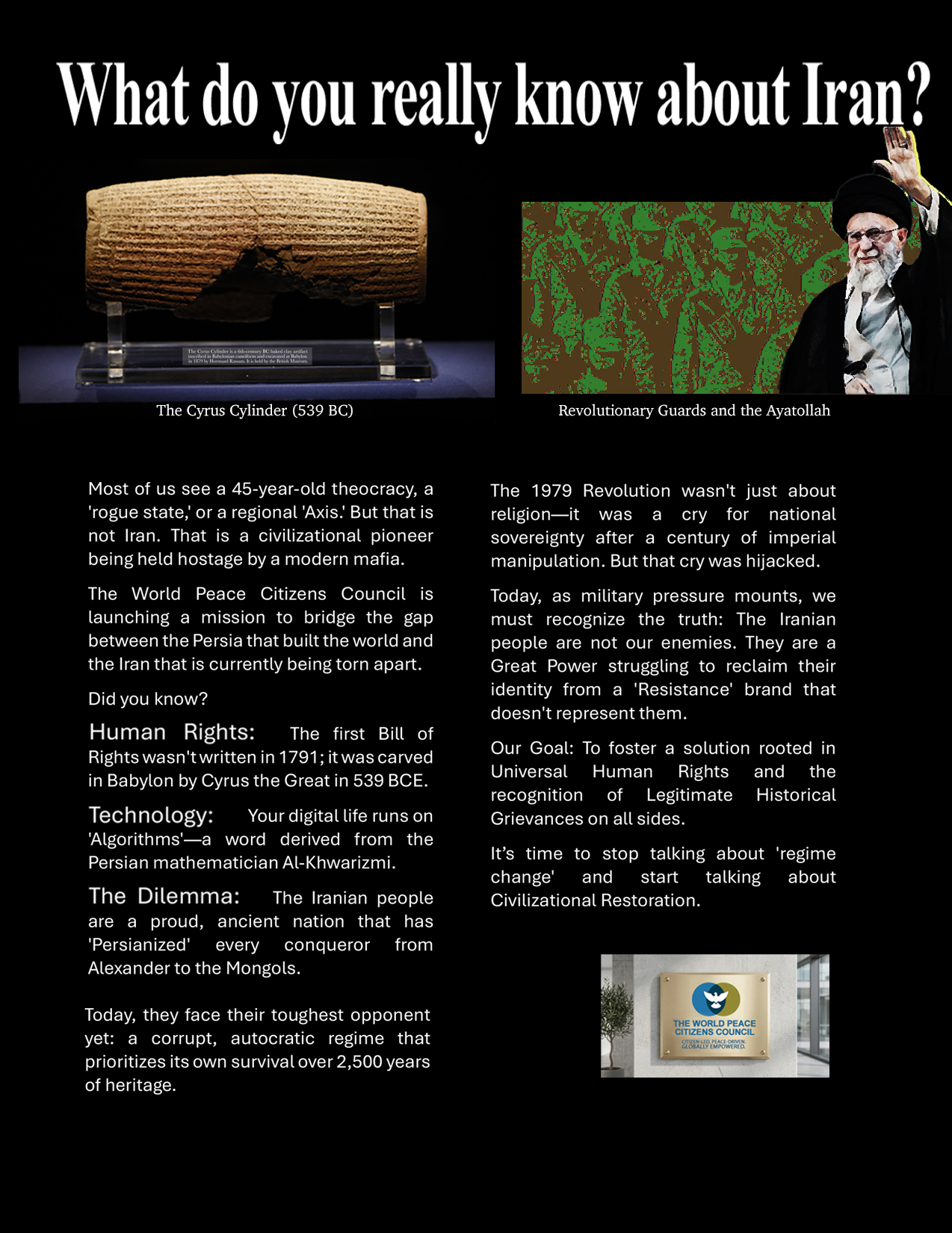
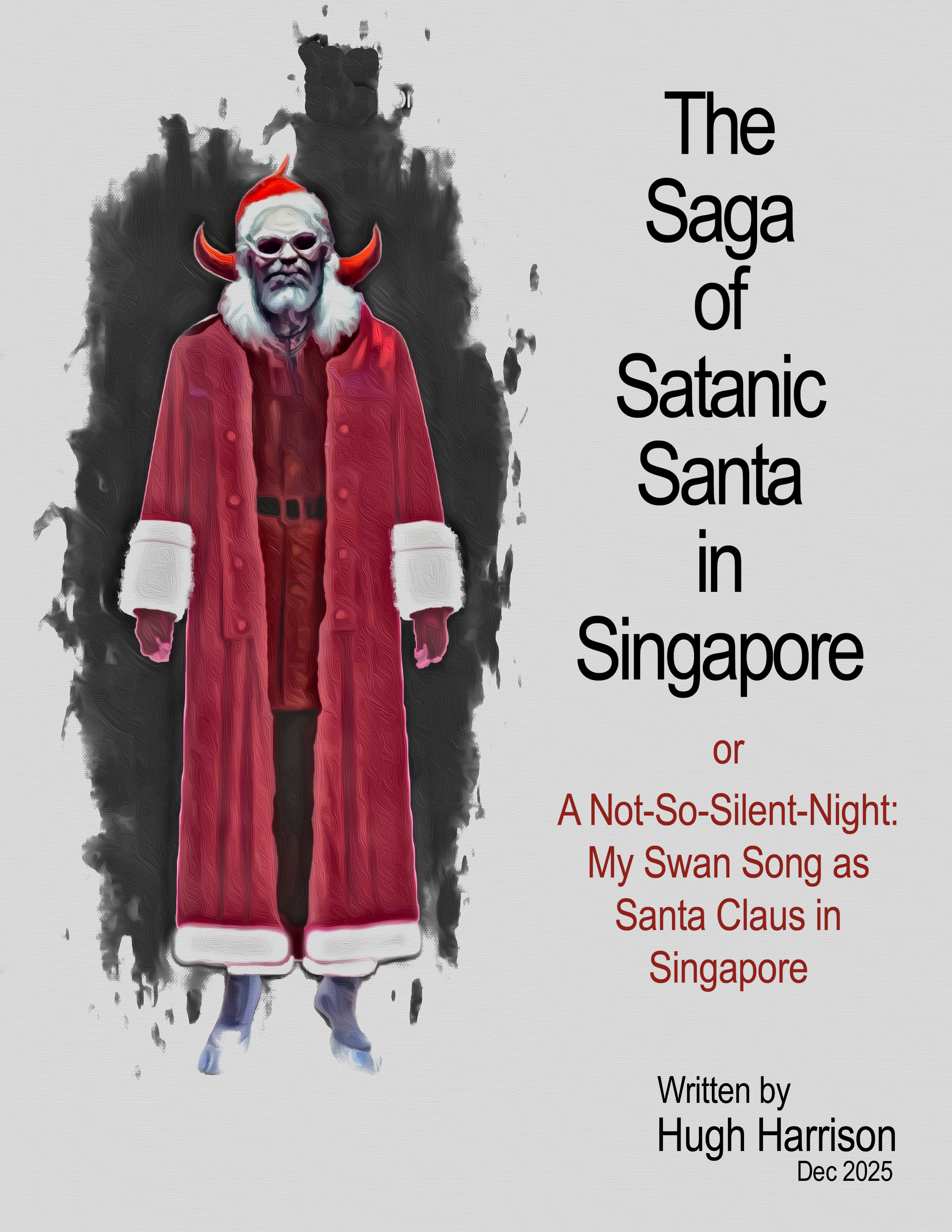
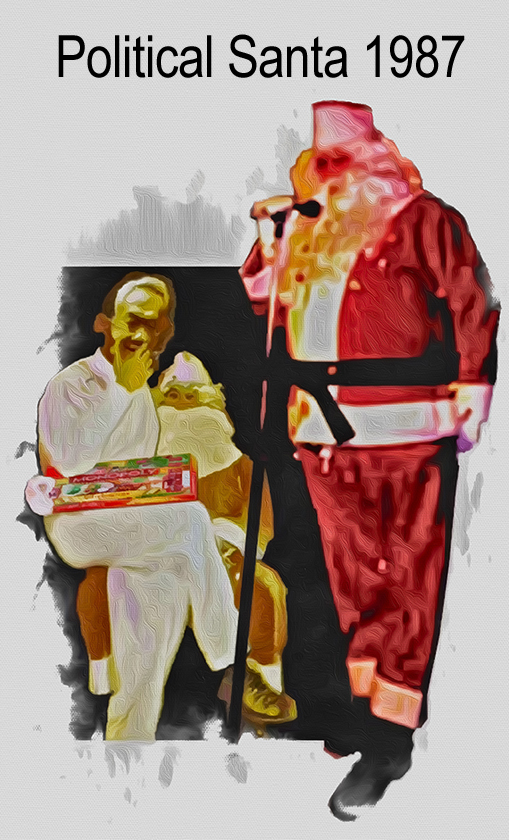
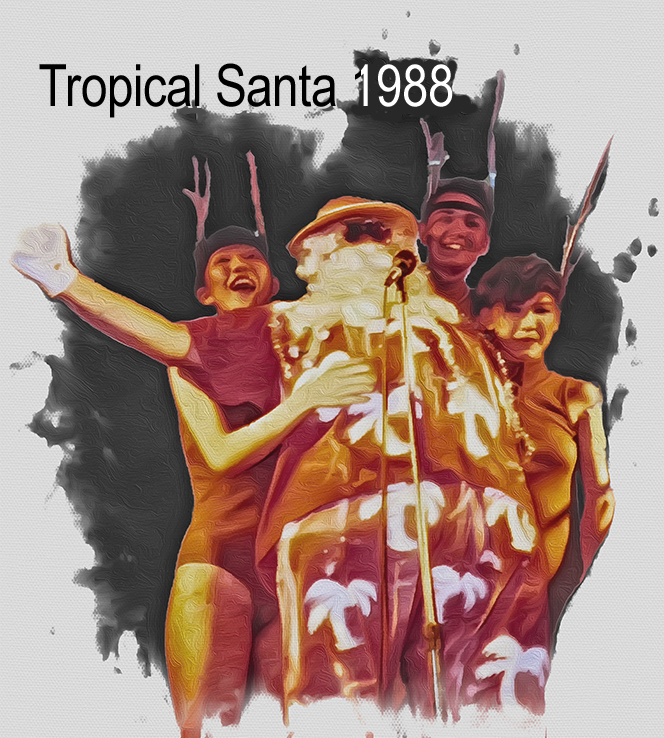

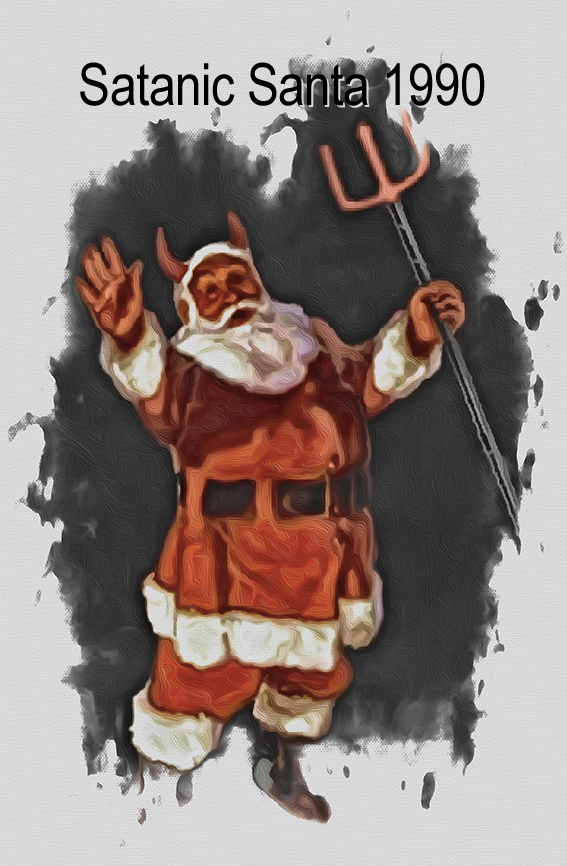
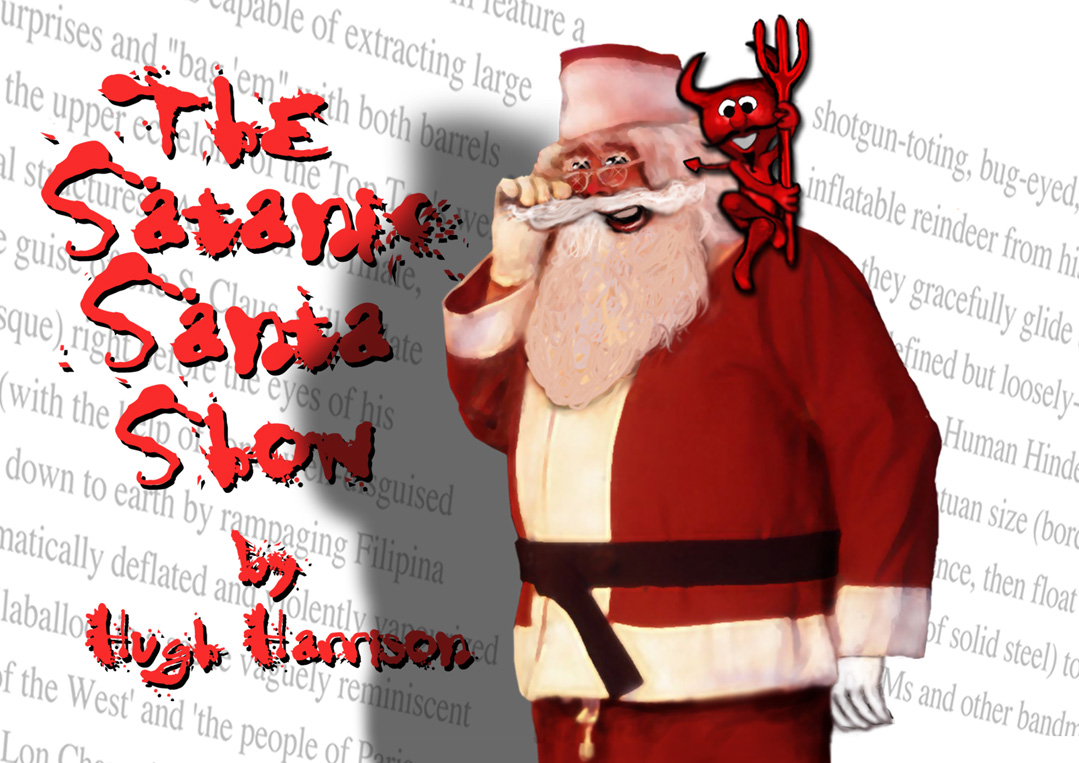
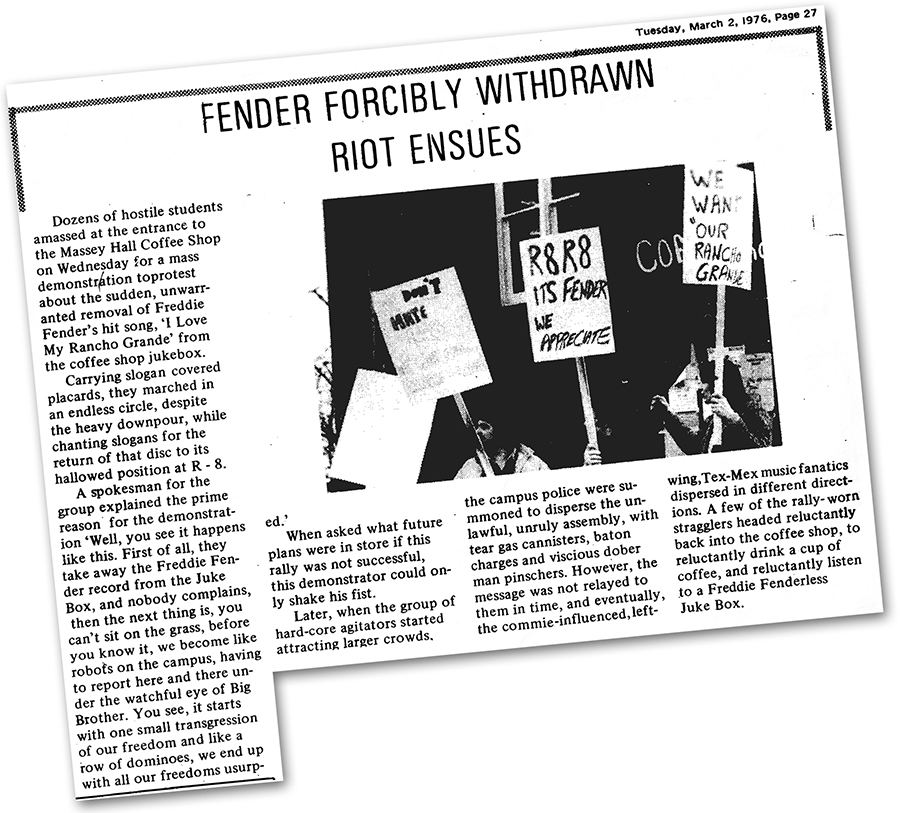
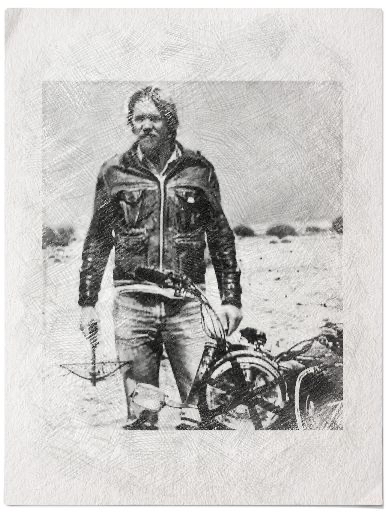
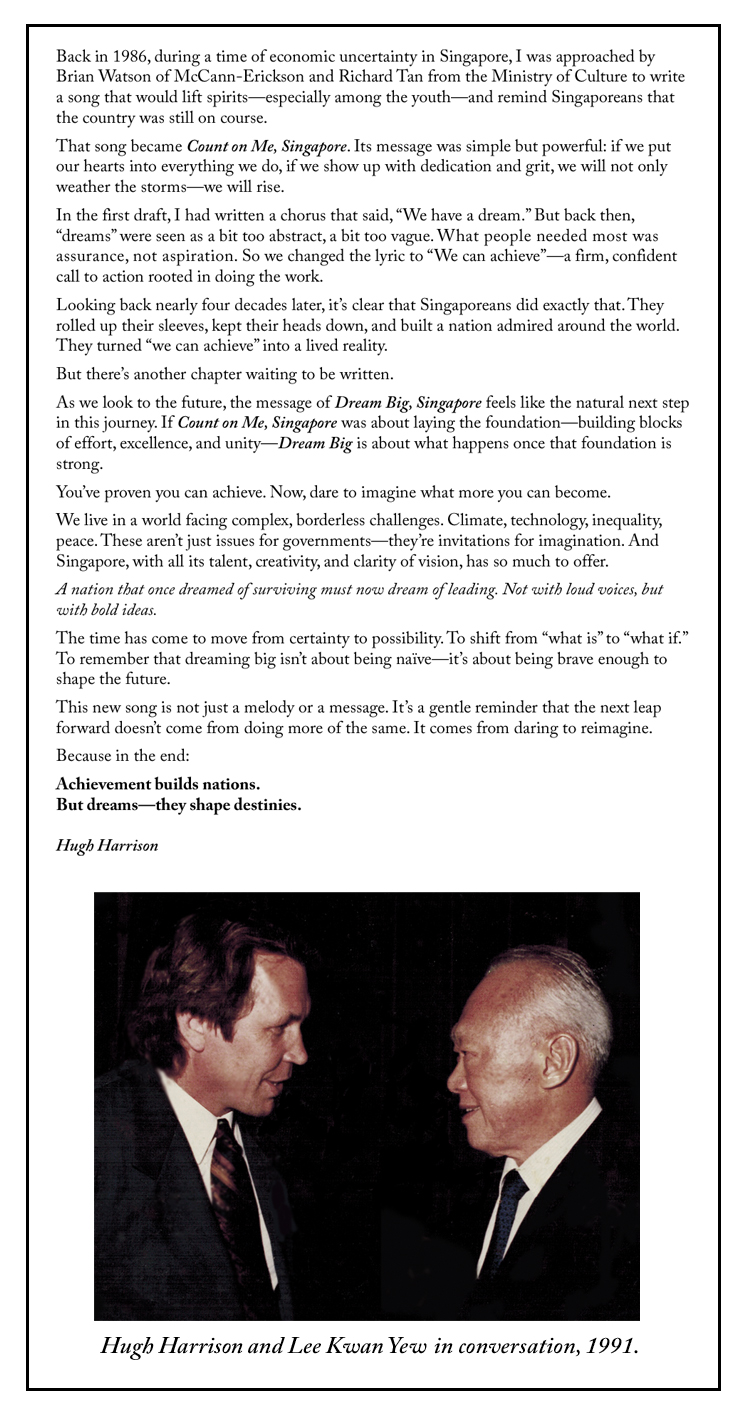

 hughchi